Your Cart
Loading
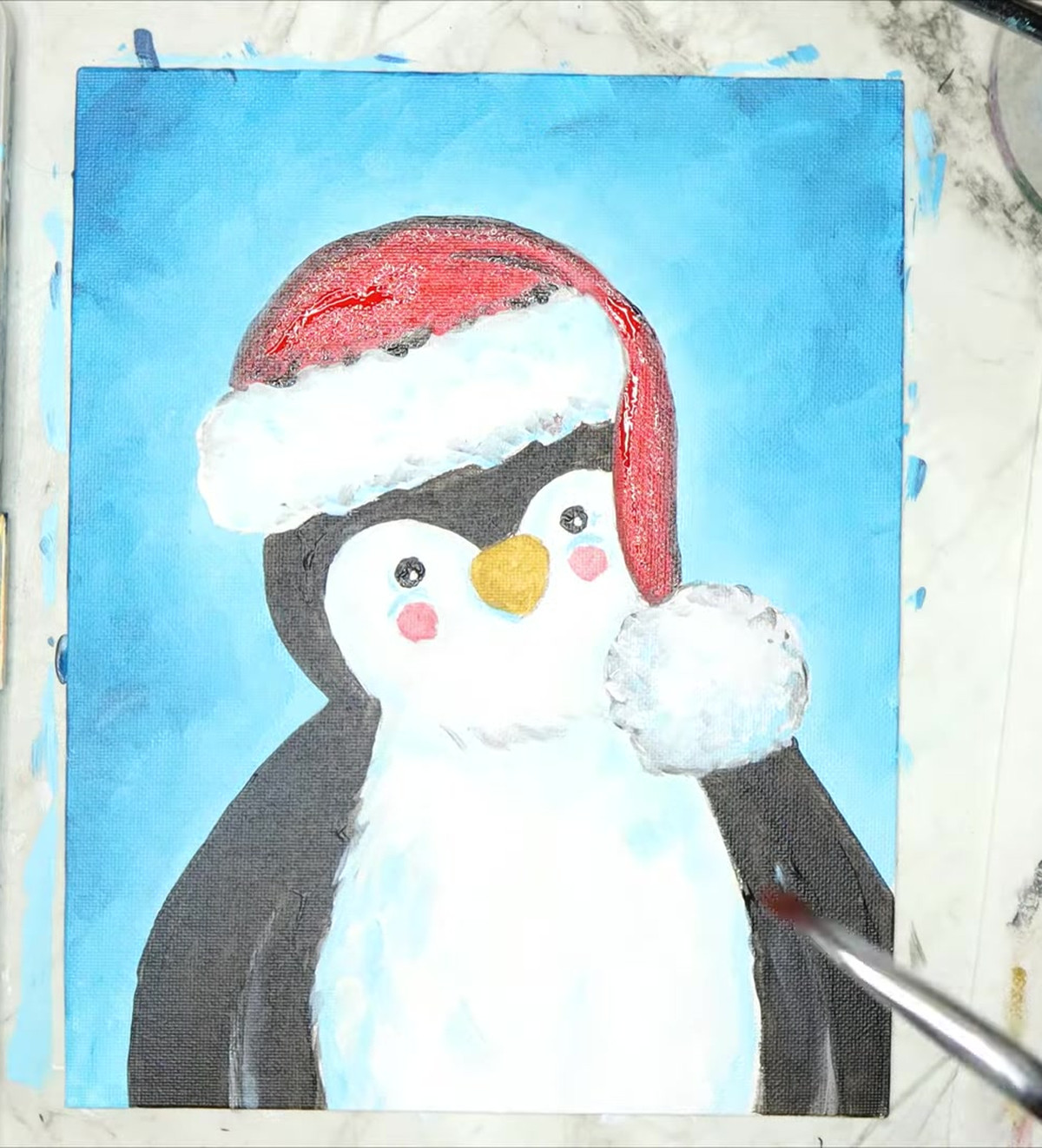
Ashley's nearly finished cute penguin painting in a Santa hat, with rosy cheeks and a fluffy pom-pom, still on the table with her palette and brushes

How to Paint a Cute Penguin (Beginner Acrylic Tips)

There's something instantly cheerful about a penguin in a Santa hat. The shape is simple, the personality comes through in a few details, and even a beginner can end up with a painting that makes people smile.


If you're a little nervous about "getting the face right," this is a gentle place to start. You don't need a complicated drawing. You need simple shapes, a few value changes, and permission to let the penguin be a little imperfect — which, honestly, is what makes it cute.


Think in simple shapes first


Before I worry about feathers or a hat, I look for the big shapes. A penguin's head and body can start as a rounded oval. The white belly is a slightly smaller shape sitting inside that oval. The flippers are simple, slightly curved forms coming down the sides. The beak is a small triangle or a rounded diamond.


If you can see those shapes, you can paint the penguin. The rosy cheeks, the sparkle in the eye, and the fluffy hat are decoration on top of a solid structure. A traceable can help if you want to skip the drawing and get straight to the painting; I include one in my penguin workshop for that reason.A simple outline of a penguin in a Santa hat on a canvas, with a light blue background already painted around it
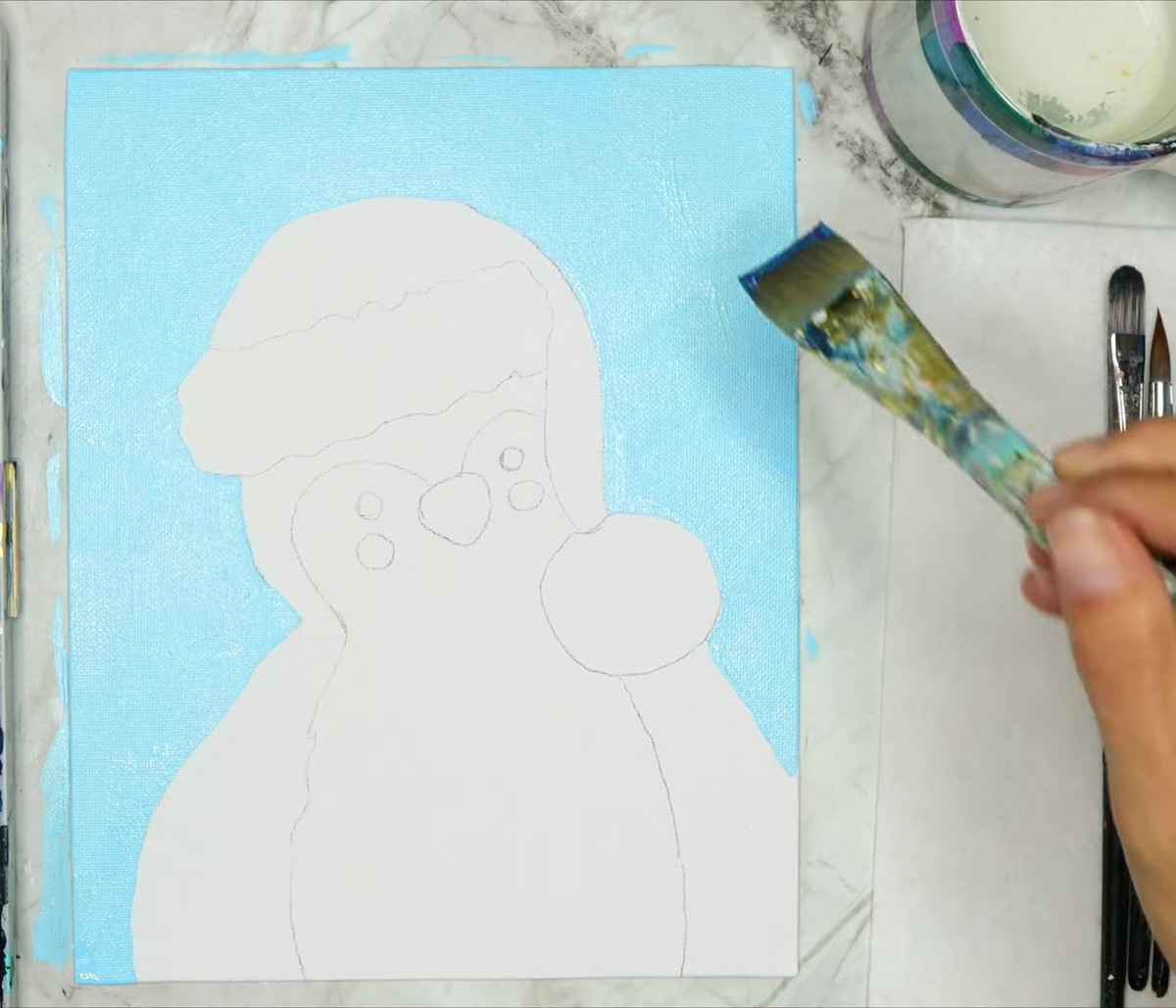
The penguin starts as simple shapes — a rounded body, a hat, and a pom-pom — with the background painted in around the outline.


Block in the darks and lights early


Penguins read clearly because of contrast: a dark back and head, a light belly, and a few mid-tones in between. I like to block in those big value shapes early, rather than starting with tiny feather marks.


Keep the belly light, but not a flat, chalky white. A little soft blue or gray in the shadows will make the white look rounder. The dark color on the head and flippers can have a bit of variation too. If every dark area is the exact same color, the penguin can look like a sticker instead of a painted form.


Leave the smallest details — the eyes, the cheeks, the highlight on the beak — until the larger shapes feel right.Ashley blocking in the dark head and flippers of a penguin against a white belly and blue background
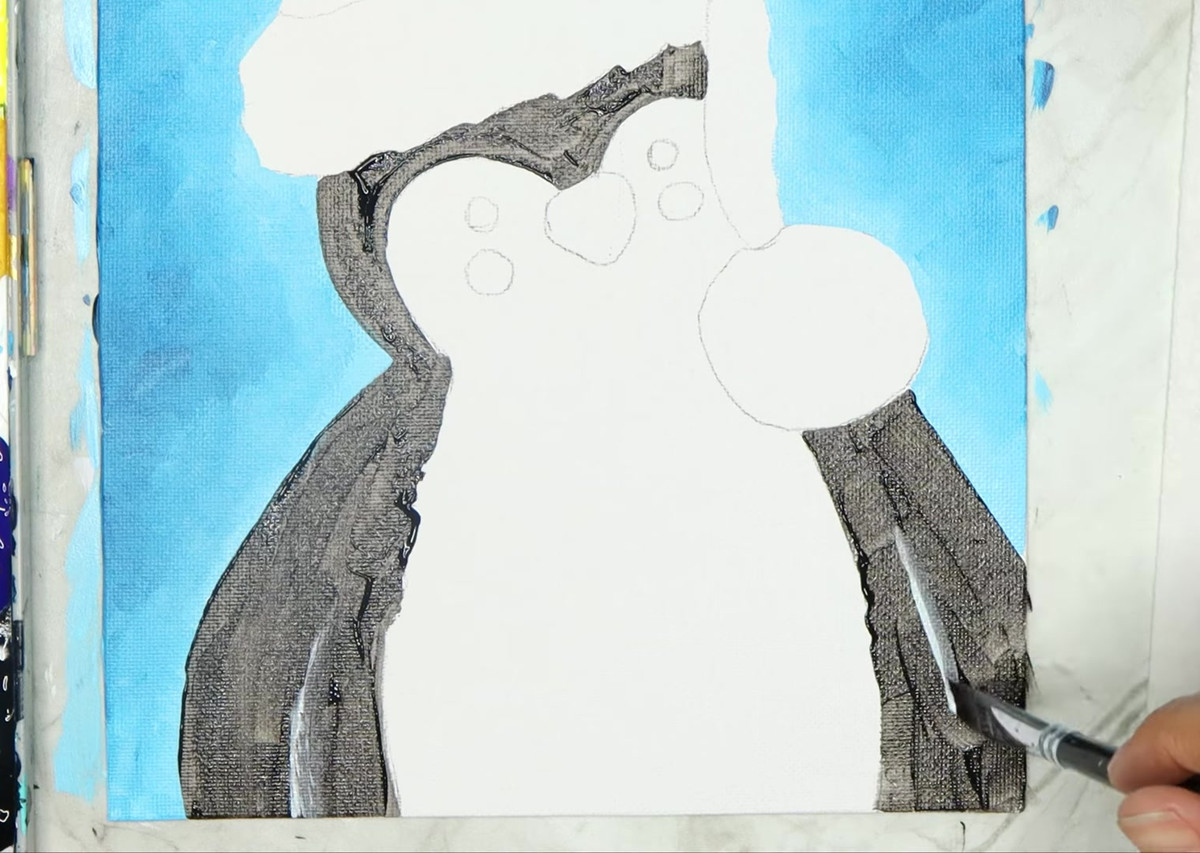
Block in the big value shapes first: a dark back and head, a light belly, and a few mid-tones in between.


The face is about a few friendly features


A "cute" penguin face is usually simpler than you think. Two rounded eyes, a small orange beak, and a hint of rosy color on the cheeks will do most of the work. I don't outline the whole face. I let the dark of the head meet the white of the belly in a soft edge, then add the features on top.


If an eye feels too severe, make it a little rounder, or add a tiny white highlight. If the beak feels too sharp, soften the corners. You're not trying to paint a wildlife study. You're painting a character you enjoy.Ashley painting the orange beak and rosy cheeks on a cute penguin in a Santa hat
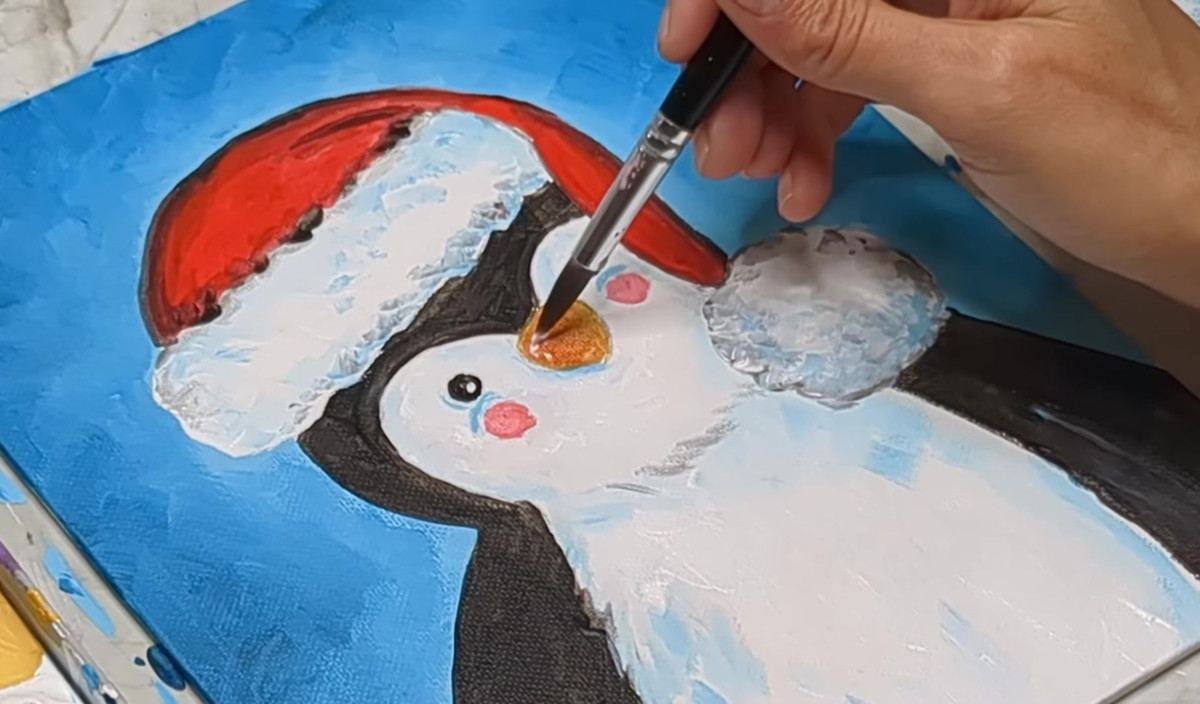
A few friendly features do most of the work: rounded eyes, a small orange beak, and a hint of rosy color on the cheeks.


The Santa hat is a chance to play


A red hat with a white brim and a fluffy pom-pom is one of my favorite parts of this kind of painting. The hat can sit a little crooked. The brim can be thick and soft. The pom-pom can be a loose, textured circle rather than a perfect ball.


Paint the hat after the head is in place so it sits naturally on top of the penguin. A little shadow under the brim helps it feel like it's really resting there. If the red feels too flat, add a slightly darker red in the folds and a lighter red where the light hits. Soft falling snow can go on at the very end; a few flakes is usually better than a blizzard.Ashley painting the red Santa hat and fluffy white brim on the penguin
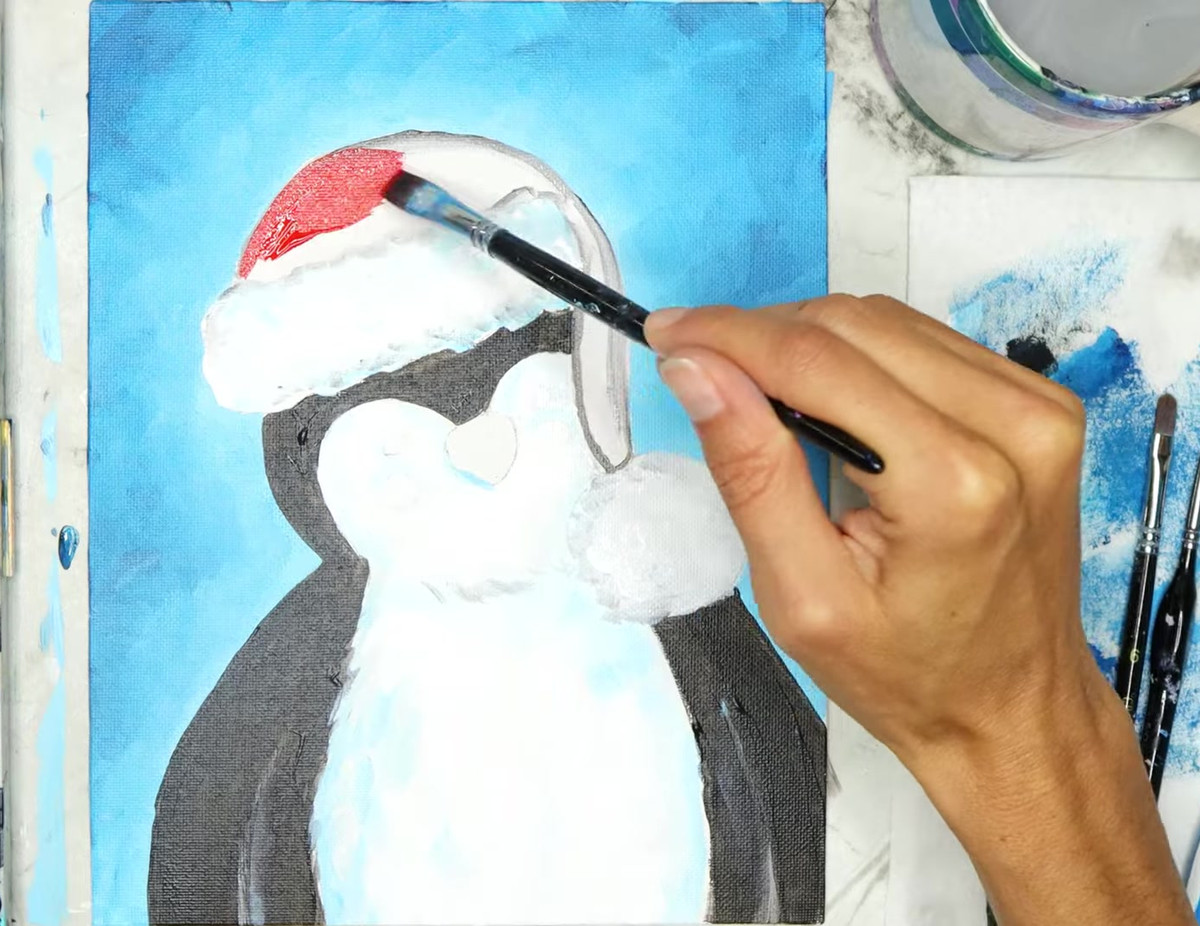
The hat can sit a little crooked, and the brim can be thick and soft — this is a chance to play.


Let the personality come through


The paintings I love most are the ones where someone made a choice — a brighter hat, rosier cheeks, a sky that's a little more turquoise than blue. If your penguin looks a little goofy, that might be the best thing about it. Stand back now and then; it's easier to see whether the eyes are level from a step away.Ashley's nearly finished cute penguin painting in a Santa hat, with rosy cheeks and a fluffy pom-pom, still on the table with her palette and brushes
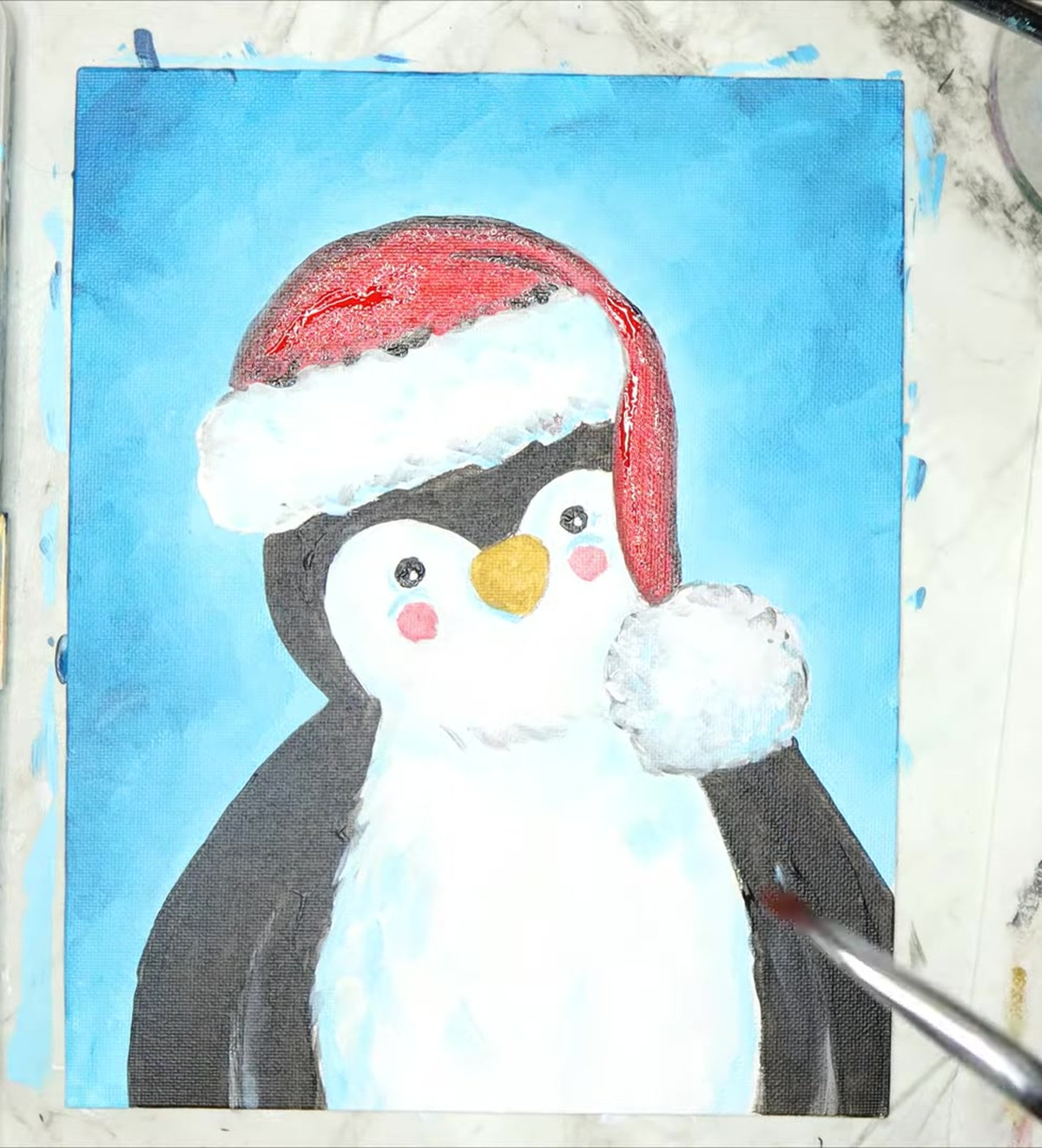
Stand back from the easel and enjoy the personality in your penguin. It doesn't have to be perfect to feel full of cheer.


If you'd like to paint along with me, my Cute Penguin Painting Workshop walks you through a festive penguin in a Santa hat, with a step-by-step video, a traceable, a color-mixing guide, a supply list, and written instructions. You can pause and rewind as often as you need.


Frequently asked questions


Is this a good project for a first painting?

Yes. The shapes are simple, and the face uses only a few features. If you can paint a rounded body, a dark head, and a red hat, you can make a charming penguin.


What if the eyes look uneven?

It happens to everyone. Let the paint dry, then gently adjust one eye or add a small highlight to even them up. A traceable can also help you place the features before you commit.


Do I have to paint a Santa hat?

No. You can leave the penguin without a hat, change the hat color, or add a scarf instead. The workshop will show you how I paint mine, and you can take it in your own direction.


How long should I set aside?

Give yourself a relaxed session, and pause between layers so the whites and reds stay clean. In the workshop, the video is about 45 to 60 minutes, and you can always take more time.


Put on some music, squeeze out a little red and white, and enjoy the process. Your penguin doesn't have to be perfect to feel full of cheer.
Ashley's nearly finished cute penguin painting in a Santa hat, with rosy cheeks and a fluffy pom-pom, still on the table with her palette and brushes
How to Paint a Cute Penguin (Beginner Acrylic Tips)
There's something instantly cheerful about a penguin in a Santa hat. The shape is simple, the personality comes through in a few details, and even a beginner can end up with a painting that makes people smile. If you're a little nervous ab...
Read More
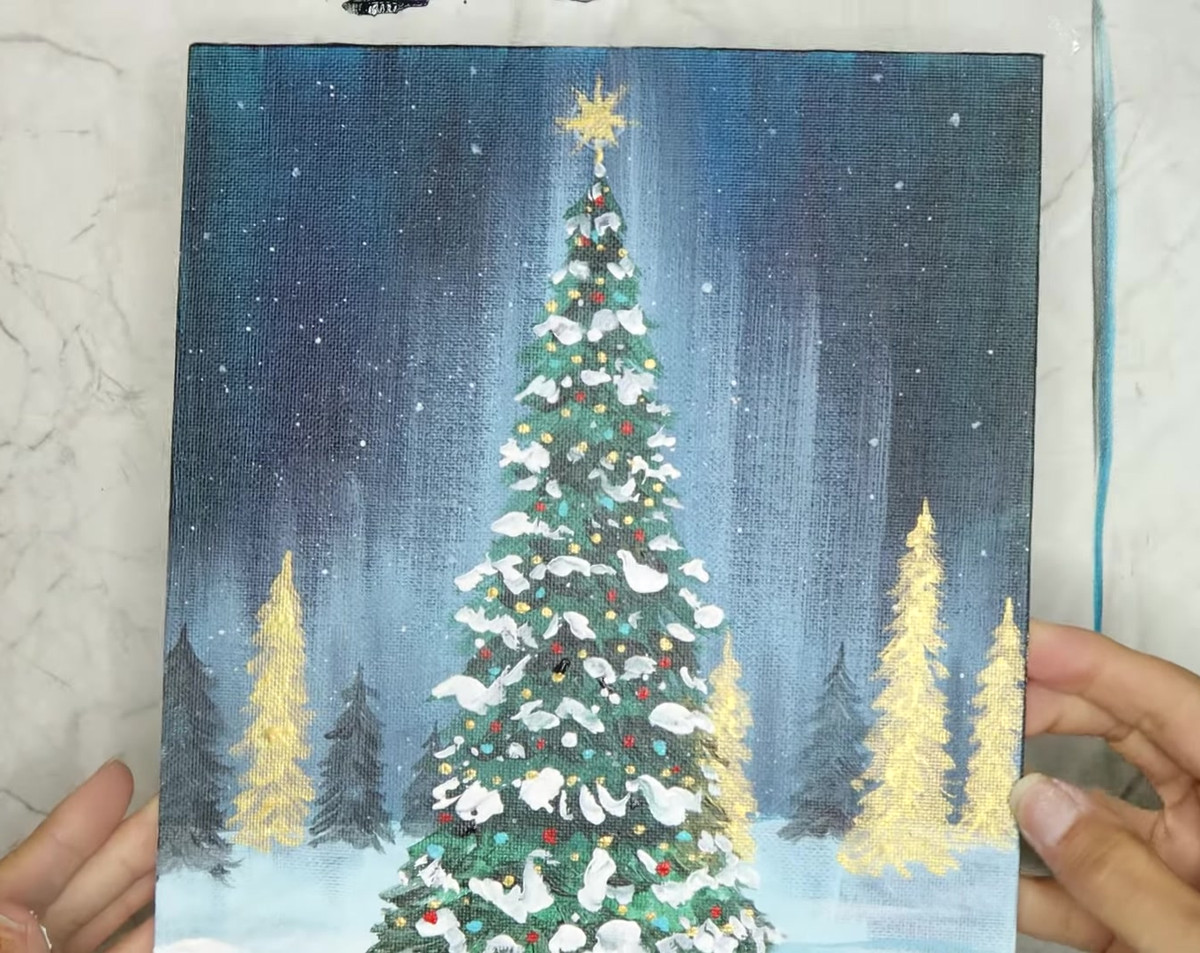
Ashley holding her finished snowy Christmas tree painting with a gold star, colorful lights, and gold background trees
Easy Christmas Tree Painting Tips for Beginners
If you've ever wanted to paint a Christmas tree and felt unsure where to start, you're in good company. A tree looks simple until you pick up a brush, and then all those branches can suddenly feel like a lot. The good news is that a Christ...
Read More
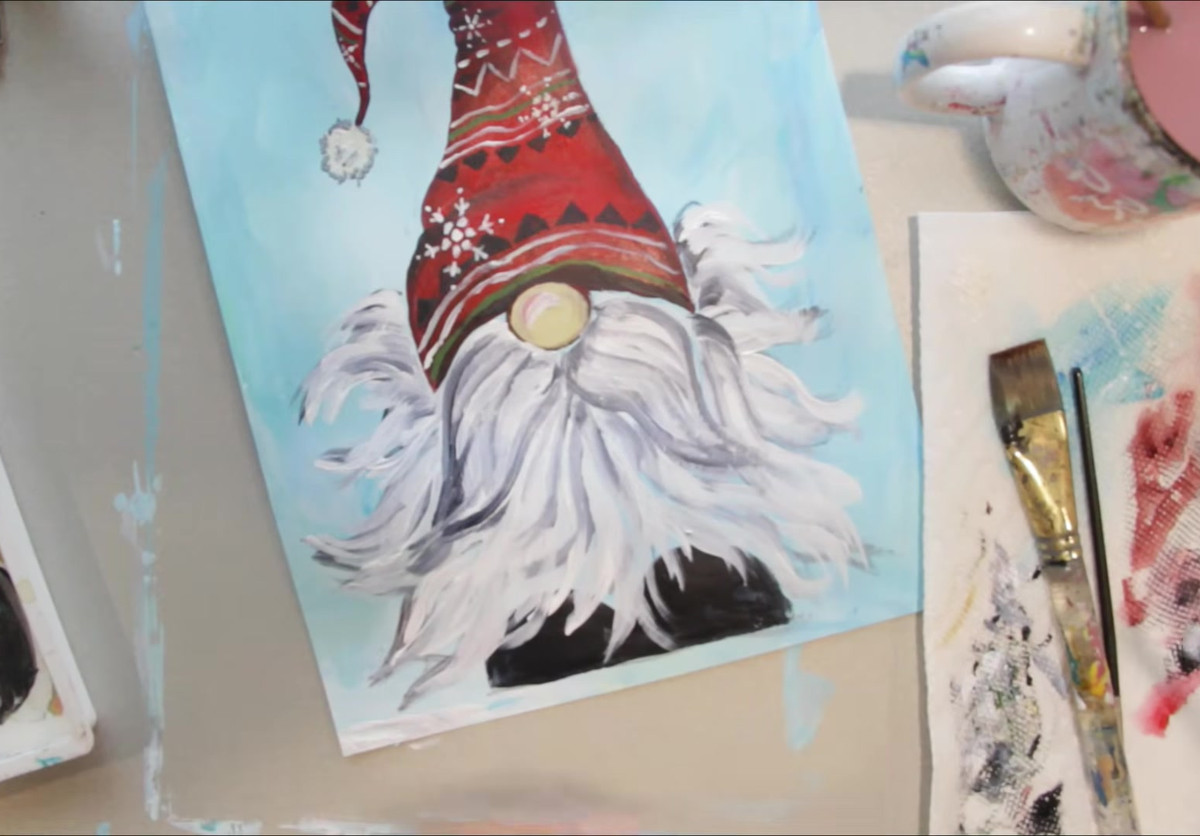
Ashley's finished Santa gnome painting on the table, with a patterned red hat, fluffy white beard, and a light blue snowy background
Holiday Painting Ideas for Gifts and a Cozy Family Night
The holidays have a way of filling up a calendar before we've had a chance to make anything with our hands. If you've been wishing for a slower evening — one that ends with a painting you can hang or wrap as a gift — this is your invitatio...
Read More
Painting the Beach with Acrylics: Easy Step-by-Step Tutorial for Beginners!
Learn how to paint the sky, ocean, waves, and sand in this easy, step-by-step, acrylic painting beach tutorial. This lesson is perfect for beginner artists. In this step-by-step beach painting tutorial, you can learn several painting techniques inc...
Read More
Easy Sketching Technique for Painting
Want to know how to easily sketch your paintings so that objects look correct? This is especially important when painting portraits, animals, and buildings, where one line off can make the entire composition not look correct. The video below will tea...
Read More
The Easiest Ways to Frame Your Paintings and Artwork
Do you want to know how to EASILY frame your artwork? This video has you covered! Discover tips for cost-effective framing that elevates your artwork, making it perfect for your wall, easel, or even as a thoughtful gift. Professionally framed painti...
Read More
How to Paint Human and Animal Hair with Acrylics
Do you want to paint hair in your art, whether on a person or animal, but you're not sure how? Today I want to share some tips that will help you paint hair and fur so you can get the look you want. Watch the video below to enjoy these tips and read...
Read More
Matching Skin Colors Art Lesson
How to Mix Skin Colors with Paints (Acrylics, Watercolors, Oils...) - Paint to Match Skin Colors
Learn how to mix skin colors! And I mean any color you need to match. Welcome to Art Tip Tuesdays, where I give you tips that will help you become a better artist! In this video, I'll teach you how to match and mix any skin color. Here are some tip...
Read More
Using color swatches and color mixing chart to match and mix paint colors
Color Mixing Made Easy: Using Swatches and Charts to Elevate Your Paint Mixing Skills
Welcome to Art Tip Tuesdays! Have you ever wanted to easily mix and match any color? In this lesson, I'll teach you how to match and mix any color you want using color swatches and my unique color chart method. First, watch the video below to s...
Read More
Artist practicing art
Do You Have What It Takes to Become a Better Artist?
Do you have what it takes to become a better artist? The truth is, you do have what it takes to become a better artist! And in this lesson, I'm going to teach you what you need to get there. As we all know, no one becomes a professional athlete...
Read More
How To Use Pebeo Vitrea 160 Paints & Other Glass Paints
I am absolutely in love with Pebeo paints. The Pebeo Vitrea 160 paints are part of a new generation of thermo-hardening, water-based, non-toxic paints. They are translucent and gorgeous when painted on glass. They can look like stained glass but I u...
Read More
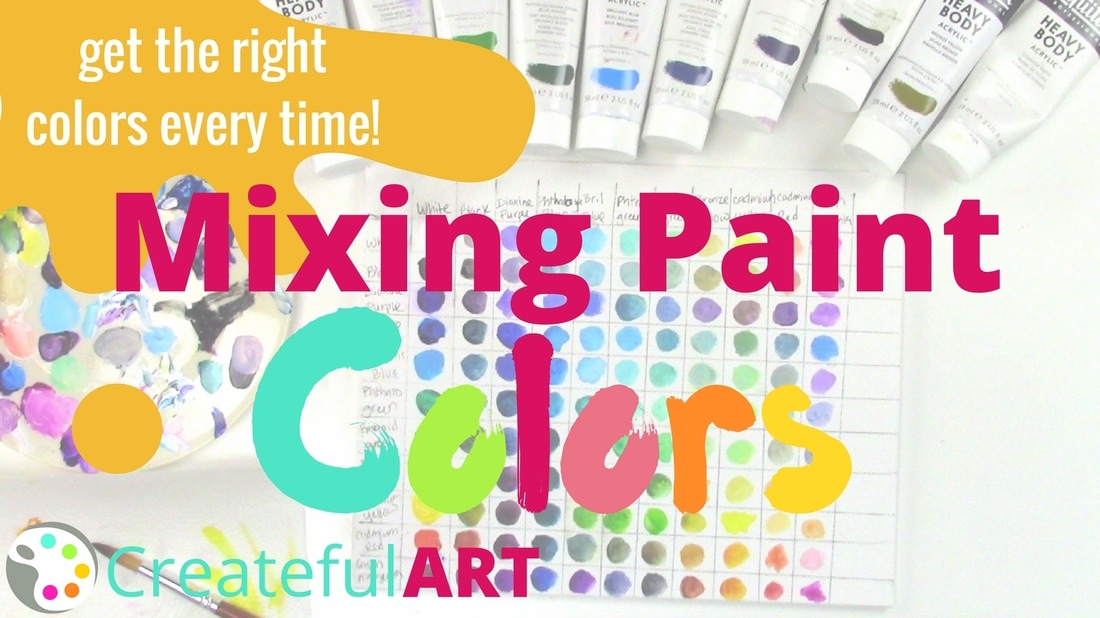
How To Mix Paint Colors and Get the Correct Color Every Time
When I first started to paint I got really frustrated when I couldn't mix and make the exact color I wanted. I wasted money and time either by having to buy the perfect colors or by mixing my paint to the point that it was ruined. So I came up ...
Read More
How to Slow Dry Time & Blend with Acrylics
Blending with acrylics can be tricky, especially those soft buttery-smooth transitions from one color to another. There are several reasons acrylics can be hard to blend. In this lesson, I'll teach you how to overcome each blending obstacle and...
Read More
The Differences Between Oil Paints and Acrylic Paints
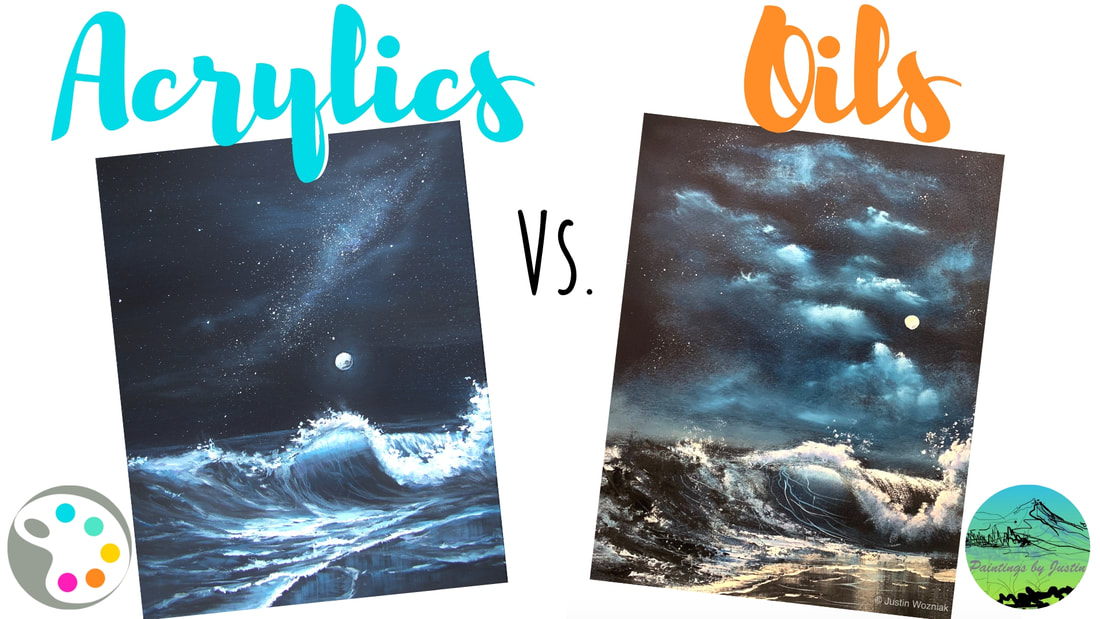
  For this lesson, a friend, Paintings by Justin, and I wanted to make a video together on the differences between oils and acrylics. Justin painted this ocean wave scene in oils and I painted the same scene with acrylics. We hope this helps y...
Read More
DIY Beach Art with Lessons on Finding Your Art Style
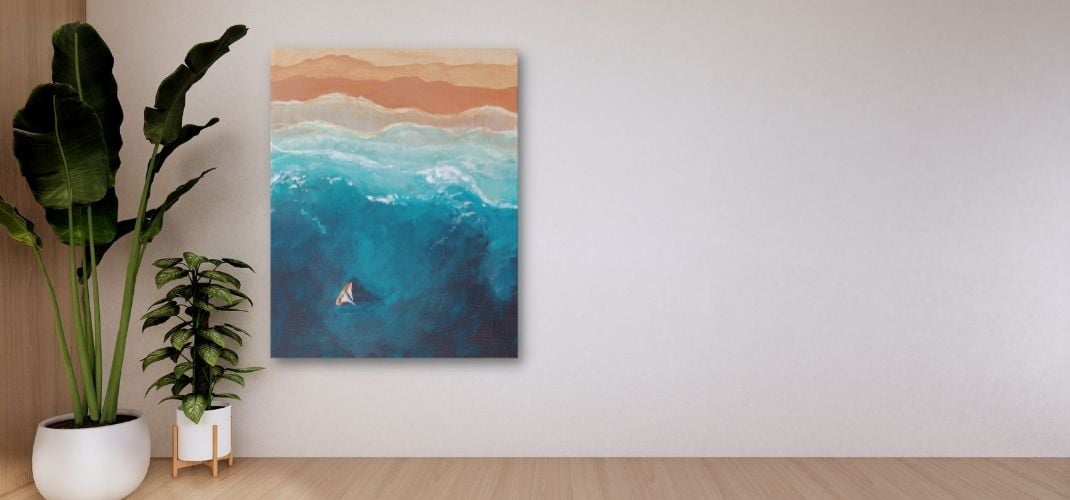
I love decorating with beach and ocean art! It gives a space a relaxing-vacation vibe. I suppose that's why I paint beach art regularly and decorate with it in my own home.Of course, you can make your own art to display in your home, o...
Read More
A Traveling Artist's Road to a Minimalist Studio
I reminisce about the days I had a creative studio, with so much space I couldn't fill it up. I really did have that once and I loved it.  But, I wouldn't give up being able to travel full time with my family. Four years ago, I traded in my hom...
Read More
How to Paint Flowers | Create Your Own Floral Paintings
There is so much pleasure in painting flowers. Maybe it's how each brushstroke comes together to create such beauty. Or, how relaxing and forgiving flower painting can be. Or, how floral paintings can be enjoyed by anyone regardless o...
Read More